
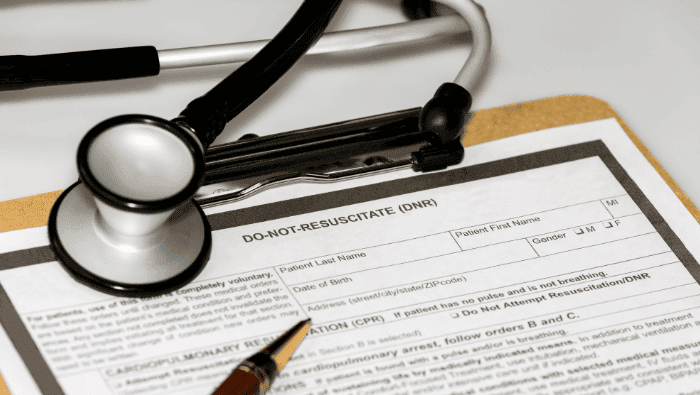
Planning for serious illness or future medical care can be difficult, especially when it involves decisions about end-of-life treatment. However, understanding your options can help you make informed decisions, communicate your wishes, and give your loved ones greater clarity during challenging times.
A Do Not Resuscitate order, commonly called a DNR, is a medical order that directs health care providers and emergency personnel not to perform certain resuscitation measures when a person’s heart stops beating or they stop breathing under the circumstances covered by the order.
If you’re wondering how to get a DNR in South Carolina, it’s important to understand that the state has specific requirements for emergency-services DNR orders. Simply downloading a form or writing down your wishes may not be enough to establish a valid order.
In our legal guide, we explain how DNR orders work, how South Carolina laws apply, who may qualify, and how to obtain the appropriate documentation. We will also discuss how a DNR differs from a living will and a health care power of attorney, two important documents to consider as part of your broader estate plan.
What is a Do Not Resuscitate Order (“DNR”)?
A Do Not Resuscitate order is a medical order directing medical personnel not to perform specified resuscitation measures if a patient experiences cardiopulmonary arrest. This generally means the person’s heart has stopped beating effectively or they have stopped breathing. Resuscitation may involve cardiopulmonary resuscitation (CPR), electrical shocks to restore a heart rhythm, or other measures intended to restart the heart or breathing.
A DNR documents a person’s wishes about these specific interventions. It is often considered by individuals with a terminal illness or other serious medical circumstances who want their end-of-life treatment preferences understood and respected.
Does a DNR mean you will not receive medical treatment?
No. A DNR is not a blanket refusal of medical care. A DNR addresses resuscitation under the circumstances covered by the order. It does not automatically mean that other appropriate medical treatment, pain management, or comfort care will be withheld.
For example, a person with a DNR may still receive treatment for an infection, medication to manage pain, oxygen when appropriate, or other care consistent with their medical needs and treatment preferences.
South Carolina law specifically requires emergency medical services personnel responding to a patient with a qualifying DNR order or bracelet to provide the appropriate palliative care called for by the circumstances. The purpose of a DNR is to document a person’s wishes about resuscitation, not to deny them compassionate care.
How is a DNR different from a living will or health care power of attorney?
Although a DNR, living will, and health care power of attorney (POA) may work together as part of your medical and estate plan, they serve different purposes.
- Do Not Resuscitate order: A specific medical order addressing resuscitation in the circumstances covered by the order.
- Living will: A legal document that communicates certain wishes concerning life-sustaining treatment if you become unable to make or communicate medical decisions under the conditions specified in the document.
- Health care power of attorney: A legal document that appoints someone you trust to make health care decisions on your behalf when you cannot make them yourself, within the authority granted by the document and applicable law.
A DNR does not replace a living will or health care power of attorney. Likewise, having a living will does not automatically establish a valid emergency-services DNR order in South Carolina. Reviewing these documents together can help you identify gaps, clarify your intentions, and prepare the people who may need to make decisions on your behalf.
How Do DNRs Work in South Carolina?
South Carolina regulates emergency-services DNR orders under the Emergency Medical Services Do Not Resuscitate Order Act, found in S.C. Code Ann. §§ 44-78-10 et seq.
The law establishes requirements for obtaining a DNR order, identifies who may request one, and explains how emergency medical services personnel must respond when a qualifying order is presented.
South Carolina’s requirements for a DNR
Under South Carolina law, an emergency-services DNR order is generally available when a patient has a qualifying terminal condition diagnosed by a health care provider. The provider’s medical record must establish the time, date, and medical condition supporting the diagnosis.
The law allows a qualifying patient to request an order. In certain circumstances, a legally authorized surrogate, an agent named in a health care power of attorney, or a parent or legal guardian with the appropriate authority may also request an order.
The order must meet the applicable legal and documentation requirements. It is not enough to assume that a general statement of medical wishes will automatically be recognized as an emergency-services DNR.
You can review the requirements in the South Carolina Emergency Medical Services Do Not Resuscitate Order Act. The South Carolina Department of Public Health’s EMS forms and protocols also provides the state’s official DNR form.
What happens when emergency responders arrive?
South Carolina law generally requires emergency medical services personnel not to perform resuscitative treatment when a qualifying emergency-services DNR order is presented upon their arrival or the patient is wearing a qualifying DNR bracelet. Appropriate palliative care must still be provided.
The order or bracelet must be identifiable when emergency personnel arrive. If responders are unaware of a DNR or cannot identify a qualifying order, the situation may be handled differently under the law.
For this reason, anyone with a DNR should ask their health care provider how to keep the order accessible, whether a qualifying bracelet is appropriate, and how to communicate their wishes to family members and caregivers.
Can a DNR order be revoked?
Yes. South Carolina law provides specific ways to revoke an emergency-services DNR order.
For example, a patient may revoke an order by destroying the document or by communicating to an emergency medical technician, first responder, or appropriate emergency health care facility personnel that they wish to be resuscitated. The law also addresses revocation involving a DNR bracelet, including removing or destroying it.
Because the process has specific legal requirements, patients should discuss any change in their wishes with their health care provider and make sure their documentation and any associated bracelet accurately reflect their current decision.
Understanding these requirements can help you make informed choices and communicate your preferences clearly.
Who Can Have a DNR?
Eligibility for an emergency-services DNR in South Carolina depends on the state’s legal requirements and the person’s medical circumstances. A person’s preference not to receive CPR does not, by itself, establish eligibility for the specific emergency-services DNR process described in the statute.
Generally, the law requires a qualifying terminal condition diagnosed by a health care provider, with the diagnosis documented in the medical record.
A qualifying patient may request that their health care provider execute an emergency-services DNR order. South Carolina law also identifies certain people who may make a request on another person’s behalf in applicable circumstances.
These may include:
- A legally authorized surrogate: A surrogate who has authority to make health care decisions for a patient with a terminal condition under South Carolina’s Adult Health Care Consent Act.
- An agent named in a health care power of attorney: An agent with the applicable authority to act for a patient with a terminal condition.
- A parent or legal guardian: A parent or legal guardian with the legal authority to make medical decisions for a child with a terminal condition, subject to the specific statutory requirements and limitations.
The rules for representatives and minors are specific, and not every person who assists with a loved one’s care has the legal authority to request a DNR.
If you are considering a DNR for yourself or helping a family member understand their options, speak with the treating health care provider about medical eligibility and the required documentation. If questions arise about who has legal authority to make the request, an experienced estate planning attorney can help explain the relevant legal documents and applicable requirements.
The goal is to make sure the patient’s wishes are understood and that any decisions are handled in accordance with South Carolina law.
Do I Need a Lawyer to Get a DNR in South Carolina?
You generally do not need a lawyer to obtain an emergency-services DNR order in South Carolina. The process is medical in nature and requires the involvement of the appropriate health care provider. However, consulting an experienced South Carolina estate planning attorney can be helpful when you are making decisions about future medical care and want to ensure your legal documents reflect your wishes.
A DNR addresses a specific situation: whether resuscitation should be performed under the circumstances covered by the order. Other estate planning documents can address broader questions about your care and who may make decisions on your behalf. An estate planning attorney can help you understand how these documents differ and how they can work together.
An attorney can also help you prepare and review the legal documents that form part of your estate plan. However, an attorney does not replace a health care provider’s role in determining medical eligibility for or issuing an emergency-services DNR order.
How to get a DNR in SC
If you are considering a DNR, the following steps can help you understand the general process in South Carolina.
- Talk with your health care provider.
Start by discussing your wishes concerning resuscitation with your doctor or other appropriate health care provider. Ask whether you meet South Carolina’s requirements for an emergency-services DNR and what the process involves for your particular medical circumstances. This conversation is also an opportunity to ask questions about resuscitation, comfort care, and other treatment options.
- Confirm the medical eligibility requirements.
South Carolina’s emergency-services DNR process generally requires a qualifying terminal condition diagnosed by a health care provider. Your provider must evaluate the applicable requirements and ensure the diagnosis is documented appropriately in the medical record. If you are helping a loved one, ask what legal authority or documentation may be needed for you to participate in the request.
- Complete the appropriate DNR order.
South Carolina provides an official Emergency Medical Services Do Not Resuscitate Order form, identified as DPH 3462. You can access the form through the South Carolina Department of Public Health.
The required information and signatures must be completed in accordance with the applicable requirements. Downloading or signing a form on your own does not necessarily establish a valid emergency-services DNR order. Work with your health care provider to make sure the appropriate order is completed and that you understand how it will be recognized by emergency personnel.
- Ask about the DNR bracelet.
South Carolina law recognizes qualifying DNR bracelets as a means of identifying patients who have obtained an emergency-services DNR order that has not been revoked. Ask your health care provider whether a bracelet is appropriate for your situation and how to obtain one through the applicable process. South Carolina’s law addresses approved bracelets and requires a health care provider’s order before an approved vendor may fulfill a bracelet request. Your provider can explain the relevant requirements and options.
- Make sure the order can be identified when needed.
Once your DNR order has been completed, ask your health care provider how it should be kept and presented if emergency medical services are called.
Discuss how family members, caregivers, and others involved in your care can be made aware of your wishes. If you have a qualifying DNR bracelet, understand when and how it should be worn. These practical steps can help reduce confusion during an emergency, when family members may be under significant stress and decisions may need to be made quickly.
- Review your other advance directives with your estate planning lawyer.
Obtaining a DNR is one part of planning for future medical care. It is also worth reviewing your living will and health care power of attorney to make sure they reflect your current wishes. An estate planning attorney can help you understand what each document covers, whether your existing documents need to be updated, and how they fit into your broader estate plan.
Can Anything Override a DNR Order in South Carolina?
A valid emergency-services DNR order is subject to South Carolina’s statutory requirements. Its effect depends on the circumstances, whether the order can be identified, and whether it has been revoked or otherwise falls within an exception provided by law.
A family member cannot automatically disregard a valid DNR simply because they disagree with the patient’s decision. At the same time, a document that is incomplete, unavailable, revoked, or not recognized as a qualifying order may create complications when emergency personnel arrive.
What if emergency responders cannot find the DNR?
South Carolina law generally requires emergency medical services personnel to provide medically indicated resuscitative measures when there is no qualifying emergency-services DNR order or bracelet.
Under the statute, emergency responders must not use resuscitative treatment when a qualifying order is presented upon arrival or the patient is wearing a qualifying DNR bracelet, subject to the law’s provisions. This makes it important to discuss the order’s proper use and identification with your health care provider. Do not assume that a general living will or another advance directive will automatically serve as an emergency-services DNR.
Contact Our Experienced South Carolina Estate Planning Attorneys at Harvey & Battey Today
Planning for serious illness and future medical care can bring up difficult questions. Taking the time to understand your options and document your wishes can help you and your loved ones approach those decisions with greater clarity. While a DNR order must be addressed through the appropriate medical process, estate planning can help you prepare for other important decisions about your health care, finances, and future.
At Harvey & Battey, P.A., our trusted attorneys help individuals and families throughout Beaufort, Bluffton, the Lowcountry, and beyond navigate important legal decisions. With more than 100 years of experience serving clients, our firm is committed to providing trusted legal guidance through life’s many stages. Our estate planning team, including Eugene Parrs, Ashley Amundson, and Conner Kincheloe, can help you understand your options and prepare the legal documents that support your planning goals.
Whether you need to prepare a living will, establish a health care power of attorney, or review your existing estate plan, we can help you take the next step toward putting your affairs in order. Contact Harvey & Battey today to discuss your estate planning goals and learn which legal documents may help communicate your wishes and protect your interests.